Understanding Oyster Cultivation in the Pacific Northwest
The Pacific Northwest has emerged as a premier destination for oyster cultivation, transforming coastal communities and establishing itself as a significant player in the global shellfish market. This region’s unique environmental conditions, combined with centuries of indigenous harvesting traditions and modern aquaculture techniques, have created an ideal ecosystem for oyster farming. The industry’s growth reflects both economic opportunity and a commitment to sustainable marine resource management.
Historical Context and Indigenous Heritage
Long before commercial oyster farming became prominent, indigenous peoples of the Pacific Northwest recognized the value of oysters as a vital food source. Archaeological evidence suggests that oyster harvesting in this region dates back thousands of years, with shells found in middens indicating consistent consumption and cultural significance. This deep historical connection established the foundation for the region’s contemporary oyster culture, blending traditional ecological knowledge with modern farming practices.
Environmental Advantages of the Region
The Pacific Northwest possesses several environmental characteristics that make it exceptionally suitable for oyster cultivation:
- Water Quality: Cold, nutrient-rich waters provide optimal conditions for oyster growth and flavor development
- Tidal Systems: Dramatic tidal ranges expose oysters to varied conditions that enhance their resilience and taste profile
- Natural Food Supply: Abundant plankton and phytoplankton support oyster feeding and development
- Biodiversity: The region’s marine ecosystem supports healthy oyster populations while maintaining ecological balance
Modern Oyster Farming Practices
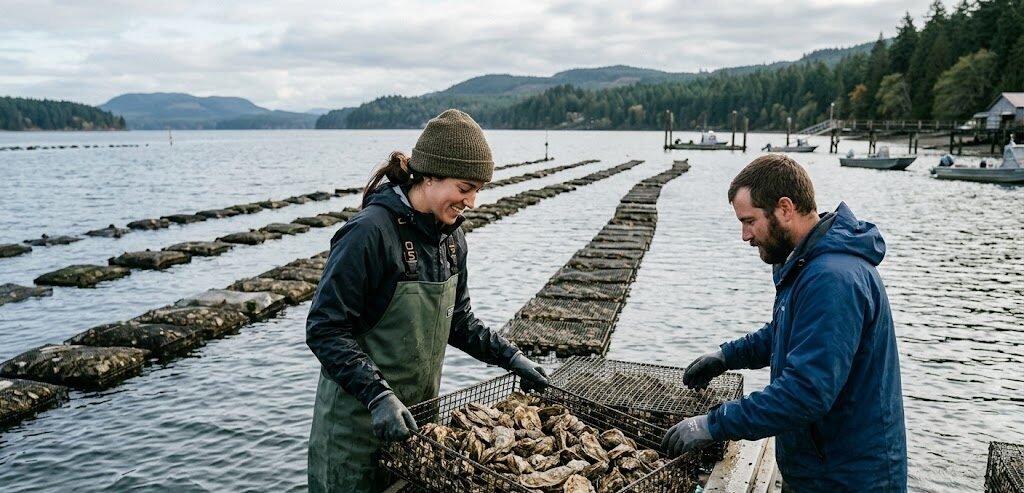
Contemporary oyster farming in the Pacific Northwest employs both traditional and innovative techniques. Farmers utilize various methods including bag culture, rack and rail systems, and floating cages to maximize production while minimizing environmental impact. Modern hatcheries have enabled producers to develop locally-adapted strains, ensuring better survival rates and improved resilience to environmental stressors.
Sustainable farming practices have become central to the industry’s philosophy. Many operations implement rotational harvesting, water quality monitoring, and habitat restoration initiatives to maintain ecosystem health while meeting market demands.
Economic Impact and Industry Growth
The oyster industry has become an important economic driver for Pacific Northwest coastal communities. Beyond direct employment in farming and harvesting, the industry supports related sectors including processing facilities, distribution networks, and tourism. Oyster festivals and farm-to-table dining establishments have created additional economic opportunities while promoting regional products.
Market demand for Pacific Northwest oysters continues to grow domestically and internationally, driven by their distinctive flavor profiles, quality reputation, and sustainability credentials. Premium pricing reflects consumer appreciation for the care and environmental stewardship embedded in each harvest.
Culinary Significance and Flavor Profile
Pacific Northwest oysters have earned recognition among culinary professionals for their distinctive characteristics. The region’s cool waters and mineral-rich environments produce oysters with complex flavor profiles, often featuring briny, slightly sweet, or buttery notes depending on specific growing conditions and oyster variety.
Chefs and seafood enthusiasts value these oysters for raw consumption, grilling, and incorporation into sophisticated culinary preparations. The terroir concept, traditionally associated with wine, has become increasingly relevant in oyster appreciation, with specific bays and farming regions developing recognizable flavor signatures.
Challenges and Future Considerations
The oyster industry faces several emerging challenges. Ocean acidification, caused by increased atmospheric carbon dioxide absorption, poses a significant threat to oyster larvae and juvenile survival rates. Temperature fluctuations, disease pressure, and regulatory requirements also demand constant adaptation and investment in research and infrastructure.
However, the industry remains resilient and proactive. Many operations invest in climate adaptation strategies, disease monitoring programs, and collaborative research initiatives with academic institutions to address these challenges comprehensively.
Community and Cultural Revitalization
Oyster culture has contributed to the revitalization of several Pacific Northwest communities. The industry has attracted young entrepreneurs and skilled workers while honoring indigenous traditions and knowledge. Educational programs teaching oyster farming techniques and marine biology have emerged as important community investments.
Local partnerships between farmers, restaurants, retailers, and consumers have strengthened community bonds and created networks of shared commitment to sustainable shellfish production.
The Future of Pacific Northwest Oyster Culture
As the oyster industry continues to evolve, the Pacific Northwest stands positioned to maintain its leadership in sustainable shellfish production. Investment in research, technology, and workforce development promises ongoing improvement in farming efficiency and environmental stewardship. The region’s combination of natural resources, cultural heritage, and entrepreneurial spirit ensures that oyster culture will remain central to the Pacific Northwest’s identity and economy for generations to come.
The rise of oyster culture in the Pacific Northwest represents more than agricultural expansion—it embodies a comprehensive approach to food production that honors history, respects the environment, and delivers exceptional products to discerning consumers worldwide.