Introduction: A City at the Crossroads of History and Innovation
Seattle’s waterfront stands as one of the Pacific Northwest’s most iconic landscapes, representing a unique intersection of maritime heritage, cultural significance, and urban development. This dynamic waterfront district has served as the economic and social heart of Seattle for over a century, witnessing the city’s transformation from a logging and gold rush settlement into a thriving modern metropolis. Today, the Seattle waterfront faces the critical challenge of honoring its rich historical legacy while embracing contemporary progress and sustainable urban growth.
The Historical Significance of Seattle’s Waterfront
The Seattle waterfront’s history is deeply intertwined with the city’s founding and development. In the late 19th century, the waterfront emerged as the primary engine of Seattle’s economy, facilitating trade in timber, fish, and agricultural products. The Great Fire of 1889 fundamentally reshaped the district, leading to architectural innovations that rebuilt the waterfront with brick and stone structures, many of which remain standing today.
Pioneer Square, adjacent to the waterfront, emerged as the city’s original commercial district and remains a testament to Seattle’s Gilded Age prosperity. The underground passages and restored Victorian architecture preserve tangible connections to Seattle’s frontier origins. These historical elements provide residents and visitors with authentic windows into the city’s formative years, making cultural preservation essential to Seattle’s identity.
Modern Challenges and Urban Development Pressures
Contemporary Seattle faces mounting pressure to modernize its waterfront infrastructure while accommodating a rapidly growing population. The city’s explosive tech sector growth has driven increased demand for commercial space, residential developments, and improved public amenities. These pressures create tension between preservation advocates and developers seeking to maximize the waterfront’s economic potential.
Key challenges include:
- Aging infrastructure requiring substantial investment in seawalls, piers, and utilities
- Environmental remediation of industrial contamination sites
- Balancing commercial interests with public access to waterfront spaces
- Managing increased foot traffic and tourism while preserving neighborhood character
- Addressing housing affordability in newly developed waterfront areas
Strategic Preservation Initiatives
Seattle has implemented comprehensive strategies to maintain historical elements while facilitating responsible development. The Historic District designation provides legal protections for architecturally significant structures, requiring developers to incorporate preservation into renovation projects. This approach has successfully maintained buildings’ exterior character while allowing interior modernization to meet contemporary standards.
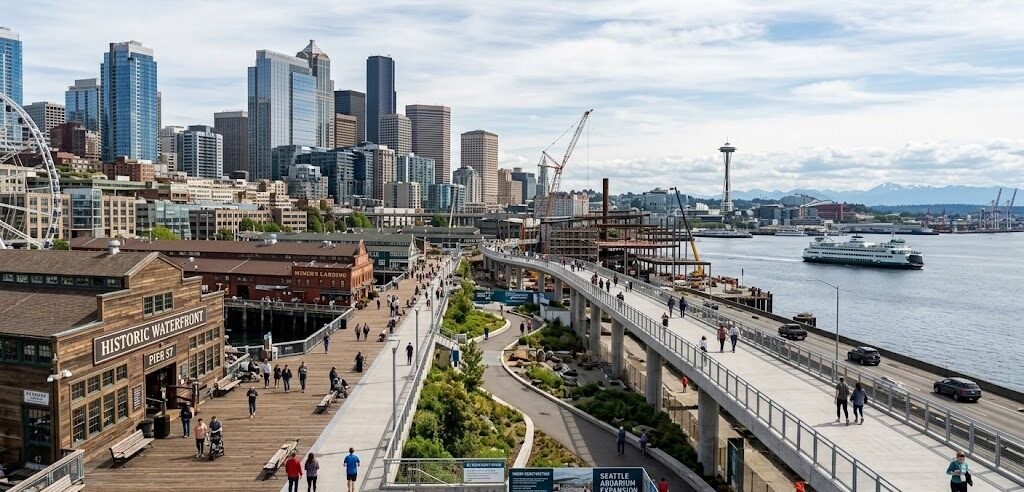
The Waterfront Park improvements exemplify how public investment can enhance heritage appreciation. Expanded public spaces, interpretive signage, and cultural programming celebrate maritime history while creating attractive gathering places for residents and visitors. Museums, galleries, and performance venues integrated into the waterfront landscape ensure that cultural narratives remain accessible to diverse audiences.
Economic Revitalization Through Heritage Tourism
Heritage tourism has become increasingly valuable to Seattle’s economy, with visitors specifically seeking authentic historical experiences. The waterfront’s restored piers, preserved warehouses, and maritime museums generate significant economic activity while creating incentives for building preservation. This mutually beneficial relationship demonstrates that honoring historical heritage and achieving economic progress are not mutually exclusive objectives.
Investment in heritage tourism infrastructure supports local businesses, creates employment opportunities, and generates tax revenue that funds further preservation efforts. Tour operators, restaurants, galleries, and specialty retailers have clustered throughout the waterfront, creating vibrant commercial ecosystems grounded in historical authenticity.
Sustainable Development Practices
Contemporary waterfront development increasingly incorporates sustainability principles that align with both environmental responsibility and long-term economic viability. Green building standards, waterfront habitat restoration, and improved stormwater management protect Seattle’s natural heritage while reducing operational costs for commercial properties.
Mixed-use developments that combine residential, commercial, and cultural spaces reduce transportation demands and create vibrant neighborhoods with round-the-clock activity. These developments carefully integrate modern amenities while maintaining visual and architectural continuity with surrounding historical structures, ensuring contextual appropriateness rather than jarring contrasts.
Community Engagement and Stakeholder Collaboration
Successful waterfront preservation requires sustained collaboration among diverse stakeholders including residents, business owners, preservation advocates, developers, and municipal authorities. Community input processes ensure that development decisions reflect the values and priorities of those most affected by waterfront changes.
Regular public forums, community boards, and collaborative planning initiatives have established mechanisms for resolving conflicts between growth and preservation. These processes recognize that waterfront decisions involve competing legitimate interests that require thoughtful negotiation and compromise rather than winner-take-all outcomes.
Looking Forward: A Balanced Future
Seattle’s waterfront future depends on sustaining the delicate balance between honoring heritage and enabling progress. This requires ongoing commitment to preservation policies that maintain historical character while permitting responsible modernization. Investment in infrastructure upgrades, environmental remediation, and public improvements must align with broader city goals regarding sustainability, equity, and livability.
Emerging opportunities including waterfront housing affordability initiatives, maritime cultural programming, and enhanced public transportation connections can simultaneously serve preservation and progress objectives. By viewing heritage and development as complementary rather than contradictory forces, Seattle can create a waterfront that honors its past while confidently embracing its future.
Conclusion: A Model for Thoughtful Urban Stewardship
The Seattle waterfront demonstrates that preserving heritage while advancing progress requires intentional planning, sustained investment, and genuine commitment to community values. By protecting historically significant structures and cultural narratives while enabling thoughtful development, Seattle has created a waterfront that serves as a dynamic, economically vibrant, and culturally rich destination. This balanced approach offers valuable lessons for cities nationwide grappling with similar challenges, proving that economic growth and historical preservation can flourish when guided by vision, collaboration, and respect for both past and future.