The Evolution of Seattle’s Historic Piers
Seattle’s waterfront has served as the lifeblood of the city since its founding in the mid-19th century. The historic piers that line Elliott Bay represent more than just physical structures; they embody the transformation of a frontier trading post into a modern metropolitan hub. From bustling commercial docks to vibrant tourist destinations, these piers tell the story of Seattle’s remarkable journey through time.
The Early Era: Foundation of Trade and Commerce
The original piers of Seattle were established as essential infrastructure for the timber industry that fueled the city’s early growth. In the 1870s and 1880s, these wooden structures served as crucial loading points for lumber destined for markets throughout the Pacific and beyond. The piers became centers of intense economic activity, where merchants, dock workers, and ship captains conducted the business that would establish Seattle as a major Pacific Northwest port.
The Great Seattle Fire of 1889 destroyed much of the waterfront, but rather than diminishing the piers’ importance, the reconstruction effort led to the development of more substantial and sophisticated dock facilities. New piers were built with improved engineering, allowing them to handle larger vessels and greater cargo volumes. This resilience set the tone for Seattle’s waterfront development for decades to come.
The Golden Age of Maritime Commerce
By the early 20th century, Seattle’s piers had become synonymous with Pacific maritime trade. The discovery of gold in the Yukon Territory in 1897 transformed the city into a major supply and departure point for prospectors heading north. Ships departing from Seattle’s piers carried everything from mining equipment to provisions, generating unprecedented economic activity and establishing the city’s reputation as a gateway to Alaska.
The piers continued to prosper through the early decades of the 1900s, serving as vital hubs for:
- International shipping and trade routes
- Passenger travel on steamship lines
- Fish processing and canning operations
- Ship building and repair services
- Import and export of regional agricultural products
This period solidified Seattle’s position as one of the most important maritime cities on the American West Coast, with the piers serving as the physical manifestation of that importance.
Mid-Century Transformations
The latter half of the 20th century brought significant changes to Seattle’s waterfront. Containerization revolutionized cargo handling, requiring new facilities and infrastructure that moved some commercial operations south to the Port of Seattle’s deeper water terminals. Additionally, the construction of Interstate 5 and the Alaskan Way Viaduct physically separated the downtown area from the waterfront, creating both challenges and opportunities for waterfront redevelopment.
Rather than allowing the piers to fall into decline, city planners and business leaders recognized the potential to reimagine the waterfront for a new era. This forward-thinking approach would ultimately prove transformative for the city’s economy and character.
The Transition to Tourism and Recreation
Beginning in the 1960s and accelerating through subsequent decades, Seattle’s historic piers underwent a gradual but profound transformation from primarily commercial spaces to vibrant tourist and recreational destinations. This transition was not immediate or uniform; some piers maintained their cargo operations while others were reimagined entirely.
Pier 54, once a major departure point for Alaska-bound steamships, became known as Pier 54 (later historic Pier 56) and began hosting tourist-oriented businesses and attractions. The Pike Place Market, established in 1907 and located near the waterfront, expanded its influence as the area became increasingly oriented toward visitors seeking authentic Seattle experiences.
The opening of the Seattle Aquarium at Pier 59 in 1977 marked a watershed moment in the waterfront’s transformation. This facility not only attracted hundreds of thousands of visitors annually but also signaled the city’s commitment to developing world-class attractions along the piers. The Aquarium demonstrated that historic waterfront areas could generate significant economic activity through tourism while celebrating the region’s natural and maritime heritage.
Contemporary Attractions and Experiences
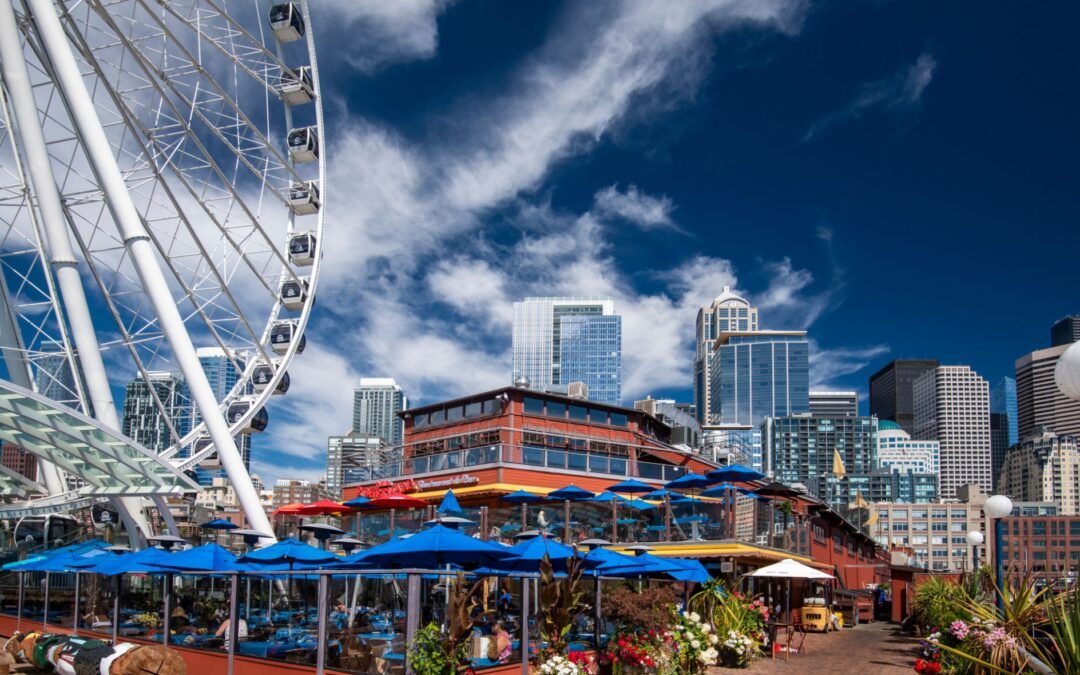
Today, Seattle’s historic piers have evolved into a diverse collection of attractions that cater to both residents and visitors. The waterfront district now features:
- The Seattle Aquarium, showcasing Pacific Northwest marine life and ecosystems
- Waterfront parks and promenades offering scenic views of Elliott Bay and the Olympic Mountains
- Restaurants and cafes serving local cuisine and fresh seafood
- Retail shops featuring local artisans and regional products
- Passenger ferry terminals connecting Seattle to Bainbridge Island, Bremerton, and other destinations
- Tour boat operators offering sightseeing cruises and wildlife viewing experiences
- Cultural venues and galleries celebrating maritime heritage and local art
This diversification has created a vibrant waterfront district that honors Seattle’s maritime past while providing contemporary entertainment and cultural opportunities. The piers have become destinations in their own right, drawing millions of visitors annually and contributing substantially to the city’s tourism economy.
Preserving Heritage While Embracing Change
One of Seattle’s greatest achievements has been its ability to preserve the character and heritage of its historic piers while adapting them for modern uses. Many of the original structures, or their successors built with traditional methods, remain visible and functional today. Walking along the waterfront, visitors can see and experience the physical evidence of Seattle’s evolution from a rough frontier port to a cosmopolitan destination.
The piers themselves have become cultural artifacts, with their wooden pilings, weathered structures, and views of Elliott Bay evoking the maritime history that shaped the city. Educational signage, historical markers, and interpretive centers throughout the waterfront help visitors understand the significance of these structures and the stories they contain.
The Economic Impact of Waterfront Tourism
The transformation of Seattle’s historic piers from trade-focused to tourism-oriented venues has had profound economic implications for the city.