The Early Morning Rush: Before the Doors Open
The alarm clock rings at 4:30 a.m., well before Seattle’s streets come to life. For a seasoned fishmonger, this early start is not negotiable. The day begins in near darkness, with a strong cup of coffee and a mental checklist of deliveries expected throughout the morning. The Pacific Northwest’s reputation for exceptional seafood does not maintain itself—it requires dedication, expertise, and an unwavering commitment to quality.
By 5:00 a.m., our fishmonger is already at the counter, preparing the workspace for the day ahead. This means inspecting the ice supplies, ensuring all cutting tools are sharp and sanitized, and reviewing the day’s inventory sheets. Every detail matters when your reputation depends on the freshness and quality of your products.
Receiving and Inspecting Fresh Catches
The first delivery trucks arrive around 5:30 a.m., bringing the morning’s selection of fresh fish and seafood. This is where a fishmonger’s expertise truly shines. Each delivery is carefully inspected for quality, temperature, and freshness. The fishmonger examines the eyes of whole fish for clarity, checks the gills for a bright red color, and ensures the flesh is firm to the touch.
Key quality checks include:
- Verifying proper ice temperatures and packaging conditions
- Inspecting each fish individually for signs of spoilage
- Confirming correct species and weight specifications
- Checking documentation for traceability and origin
- Testing for any off-odors or discoloration
Suppliers who provide substandard products learn quickly that this fishmonger maintains high standards. Relationships with trusted vendors are cultivated carefully, as they directly impact the quality customers receive.
The Art and Science of Filleting
Once inventory is processed, the real craftsmanship begins. A skilled fishmonger’s knife work is both an art and a science. Whether preparing salmon fillets, halibut steaks, or breaking down a whole Dungeness crab, precision is paramount. Each cut is deliberate and efficient, minimizing waste while maximizing yield.
The filleting station operates at full capacity by 7:00 a.m., with the fishmonger preparing cuts according to anticipated customer demand and standing orders. This requires knowledge of different fish species, their optimal cutting methods, and their best culinary applications. A fillet that works beautifully for a high-heat sear is different from one intended for delicate poaching.
Building Customer Relationships
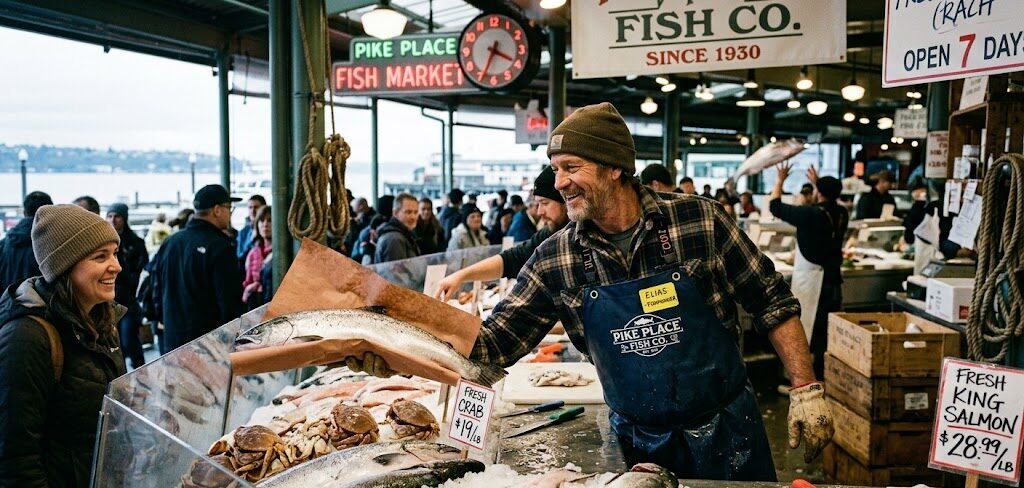
As the shop opens its doors at 9:00 a.m., the fishmonger transitions from backstage preparation to front-and-center customer service. This is where years of product knowledge become invaluable. Customers enter with varying levels of culinary expertise and specific needs that require personalized recommendations.
A typical customer interaction might involve:
- Discussing the customer’s planned dish and cooking method
- Recommending the best fish for their specific needs
- Suggesting preparation techniques and cooking times
- Offering insights about seasonal availability and pricing
- Providing storage and handling instructions
These interactions are far more than transactional. Regular customers develop trust in their fishmonger’s judgment, often deferring to professional recommendations rather than coming in with predetermined selections. This trust is earned through consistent quality, honest advice, and genuine enthusiasm for exceptional seafood.
Mid-Day Operations and Restocking
The morning rush typically peaks between 10:00 a.m. and noon, with a steady stream of home cooks and professional chefs seeking the day’s finest selections. Between customer interactions, the fishmonger continuously restocks the display cases, removing any items that have been sitting too long and arranging new cuts for optimal presentation.
Display aesthetics matter significantly. A well-organized, visually appealing fish counter draws customers and demonstrates professionalism. Proper icing techniques keep products cold while showcasing their vibrant colors and quality. The arrangement tells a story about the care and attention invested in each item.
Afternoon Responsibilities and Special Orders
As the afternoon arrives, attention turns to special orders and preparation for the following day. Many customers place advance orders for weekend entertaining or restaurant service. A meticulous order system ensures nothing is overlooked. Each special request is documented, with notes about preferred sizes, specific cuts, or particular quality requirements.
This is also when the fishmonger might prepare specialty items: clarified fish stocks, seafood salads, or prepared dishes that showcase the store’s offerings. These value-added products require additional skill and time but provide customers with convenient options and generate supplementary revenue.
Sanitation and Food Safety Standards
Throughout the entire day, food safety protocols are never compromised. Regular cleaning of cutting surfaces, constant attention to proper temperatures, and meticulous handling procedures are simply non-negotiable elements of the job. Health inspections may arrive unannounced, but a professional fishmonger maintains standards regardless of oversight.
Proper sanitation practices include:
- Sanitizing all equipment between different fish species
- Maintaining ice and refrigeration at optimal temperatures
- Following proper glove and hand-washing protocols
- Storing different proteins separately to prevent cross-contamination
- Properly disposing of waste and byproducts
The Evening Wind-Down
As closing time approaches, the fishmonger faces the day’s final critical task: determining what remains and what must be discarded. While profitability matters, reputation matters more. Any product that falls below quality standards is removed from inventory, never sold to customers. This practice sometimes means absorbing financial loss, but it protects the long-term health of the business.