The Foundation of Seattle’s Maritime Economy
Seattle’s transformation from a modest logging town into a thriving metropolitan hub cannot be separated from its relationship with the sea. At the heart of this remarkable growth lies the seafood industry, which fundamentally shaped the city’s economic, cultural, and infrastructural development throughout the late 19th and 20th centuries. The establishment and expansion of seafood markets became instrumental in establishing Seattle as a major commercial center on the Pacific Coast.
Early Origins of the Seafood Trade
The seafood industry’s emergence in Seattle was a natural consequence of the city’s geographic location. Nestled between the Pacific Ocean and Puget Sound, Seattle possessed unparalleled access to abundant marine resources, including salmon, halibut, and herring. Indigenous peoples had sustainably harvested these waters for thousands of years before European settlement, establishing a foundation of maritime knowledge that would inform commercial practices to come.
When settlers arrived in the mid-1800s, they recognized the commercial potential of these rich fishing grounds. The first organized seafood markets began operating in the 1870s, capitalizing on the city’s position as a natural gateway to Alaska’s fishing territories and Asian markets. This early entrepreneurial activity marked the beginning of Seattle’s evolution into a significant seafood trading hub.
Market Growth and Economic Expansion
The expansion of seafood markets in Seattle coincided with critical infrastructure developments that would cement the city’s coastal prominence:
- Railroad Construction: The completion of major railway lines in the 1880s and 1890s enabled efficient transportation of fresh and processed seafood to markets throughout North America, dramatically extending Seattle’s commercial reach.
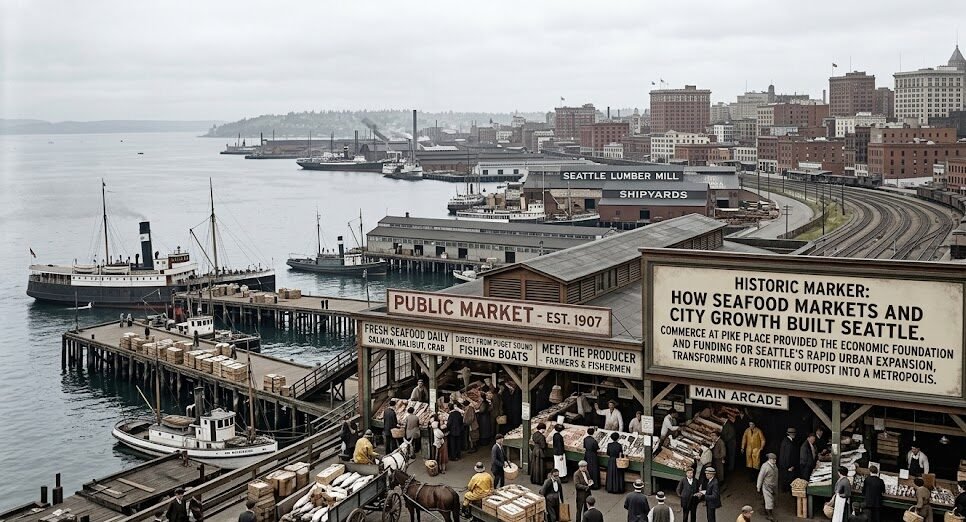
- Harbor Development: Significant investments in port infrastructure, including docks, warehouses, and processing facilities, transformed Seattle’s waterfront into a sophisticated maritime commercial district.
- Cannery Operations: The establishment of salmon canneries provided value-added processing capabilities, creating additional employment and attracting capital investment to the region.
- Ice Manufacturing: The development of ice production facilities enabled the preservation and long-distance transportation of fresh seafood, extending market opportunities beyond local consumption.
Pike Place Market: A Transformative Institution
No discussion of Seattle’s seafood markets would be complete without examining Pike Place Market, established in 1907. Originally designed to connect local fishermen directly with consumers, Pike Place Market revolutionized seafood distribution and became an iconic symbol of Seattle’s maritime heritage. The market’s success demonstrated the viability of centralized trading locations and inspired similar developments throughout the city.
Pike Place Market’s influence extended beyond commerce. It served as a cultural gathering place, a tourist destination, and a symbol of Seattle’s authentic connection to the sea. The market’s preservation and revitalization in recent decades underscore the enduring importance of seafood markets to Seattle’s identity and economy.
Employment and Population Growth
The seafood industry generated unprecedented employment opportunities that attracted workers from diverse backgrounds. Fishermen, cannery workers, dock laborers, distributors, and merchants formed a substantial workforce that supported Seattle’s rapid population growth. Between 1890 and 1920, the city’s population increased from approximately 40,000 to over 315,000 residents, a growth trajectory directly tied to maritime industry expansion.
This influx of workers and entrepreneurs created a dynamic, multicultural community. Japanese, Chinese, Scandinavian, and Italian immigrants played particularly significant roles in developing Seattle’s fishing fleet and seafood processing capabilities, enriching the city’s cultural fabric while contributing substantially to economic development.
Technological Innovation and Industrial Development
Competition within Seattle’s seafood markets drove technological innovation and industrial advancement. The development of improved refrigeration systems, mechanical processing equipment, and specialized transportation vessels originated from or were refined through application in Seattle’s seafood industry. These innovations had spillover effects throughout the regional economy, supporting the growth of complementary industries and establishing Seattle as a center of maritime technological advancement.
Regional Trade Networks and International Commerce
Seattle’s seafood markets became nodes within expanding regional and international trade networks. Japanese, Chinese, and Russian markets developed strong demand for Alaska salmon and other Pacific seafood products. This international orientation positioned Seattle as a major Pacific Rim trading center and facilitated broader commercial connections that extended well beyond the seafood industry itself.
The city’s role as an intermediary in seafood trade created opportunities for merchant banking, ship building, provisioning, and insurance services, fostering the development of a sophisticated commercial infrastructure that supported diverse economic activities.
Lasting Legacy and Contemporary Significance
While Seattle’s economy has diversified considerably since its early dependence on seafood trade, the industry’s foundational importance remains evident. The city continues to rank among North America’s leading seafood processors and distributors. Contemporary seafood markets preserve historical practices and maintain connections to Seattle’s maritime heritage while adapting to modern commercial demands.
The enduring success of seafood markets in Seattle reflects both the region’s abundant natural resources and the entrepreneurial capacity of successive generations of merchants, fishermen, and workers who recognized and developed commercial opportunities. This legacy continues to influence Seattle’s identity, support employment, and contribute to the regional economy.
Conclusion
Seattle’s transformation from a peripheral logging settlement into a major Pacific Coast metropolis was fundamentally enabled by the development and expansion of seafood markets. The industry provided the economic foundation, employment opportunities, infrastructure investments, and international connections that catalyzed the city’s growth. Today, as Seattle continues to evolve and diversify its economic base, the historic role of seafood markets in the city’s development remains a testament to the power of geographic advantage, entrepreneurial vision, and maritime commerce in shaping urban prosperity and identity.