
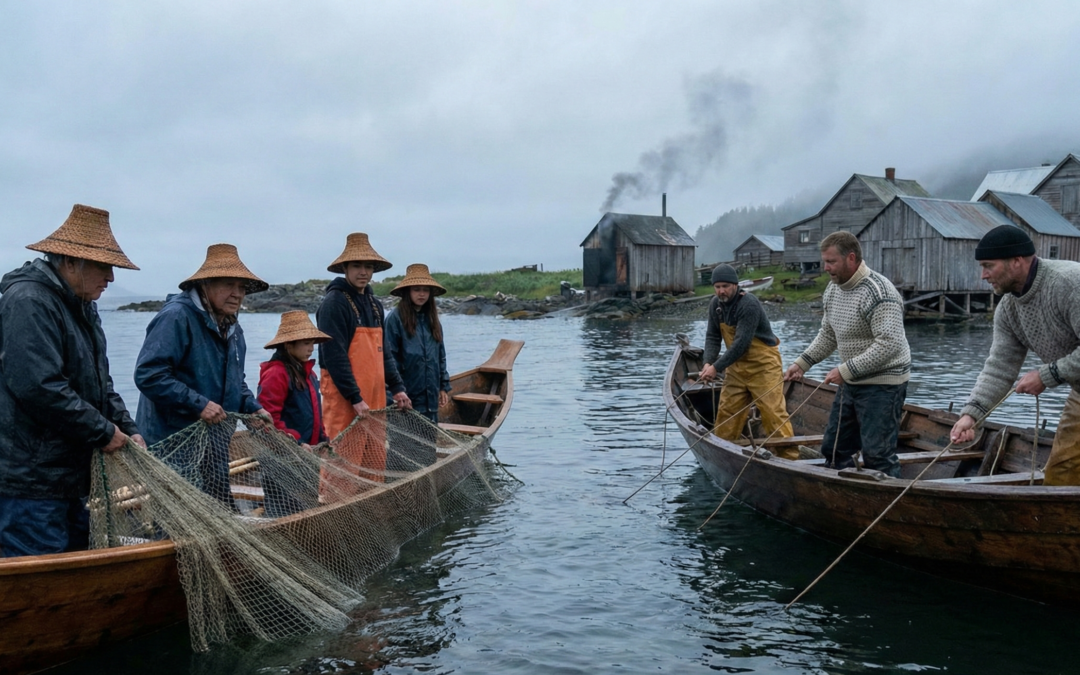
The waters of North America have long served as vital sources of sustenance, commerce, and cultural identity for diverse populations. For thousands of years, Indigenous peoples developed sophisticated fishing practices refined through intimate knowledge of local ecosystems. Later, Norse and other immigrant communities brought their own time-honored maritime traditions to these same waters. Today, these two distinct fishing legacies—Native and Norse—represent complementary chapters in the broader story of North American fishing heritage, each contributing unique methodologies, ecological insights, and cultural significance.
Indigenous Fishing Traditions: Ancient Knowledge and Sustainable Practices
Native American and First Nations peoples established some of the world’s most sophisticated and sustainable fishing practices long before European contact. These communities developed an intricate understanding of fish migration patterns, seasonal variations, and ecosystem dynamics across diverse waters—from Pacific Northwest rivers to Atlantic coastal regions and Great Lakes systems.
Traditional Techniques and Tools
Indigenous fishing methods reflected both innovation and deep environmental stewardship. Tribes throughout North America employed specialized techniques tailored to their specific environments:
- Fish weirs and traps: Elaborate structures designed to guide and capture fish while allowing sustainable harvest levels
- Hook and line fishing: Finely crafted hooks made from bone and wood, demonstrating advanced understanding of fish behavior
- Net fishing: Woven nets created from plant fibers, developed with remarkable precision for specific fish species
- Spearing: A technique requiring exceptional skill and knowledge of fish behavior patterns
- Dams and channels: Large-scale engineering projects that managed water flow while supporting fish populations
Ecological Wisdom and Sustainability
Central to Indigenous fishing practices was a philosophical approach that prioritized ecosystem balance over maximum exploitation. Native fishers understood carrying capacity, seasonal abundance, and the interconnectedness of aquatic food webs. This knowledge system supported thriving fisheries for millennia, ensuring fish populations remained robust across generations. Many Indigenous communities implemented rotational fishing practices, seasonal restrictions, and habitat restoration techniques that contemporary conservation science now recognizes as models of sustainability.
Norse and Northern European Fishing Heritage
Norse seafarers and other Northern European immigrants brought distinct fishing traditions rooted in the cold waters of the Atlantic and North Seas. These maritime cultures developed specialized knowledge for navigating challenging waters and harvesting abundant fish stocks, establishing practices that significantly shaped the development of commercial fishing in North America.
Immigrant Maritime Innovations
Norse and European fishing communities introduced several technological and methodological innovations to North American waters:
- Advanced boat construction: Vessel designs optimized for ocean conditions and long-distance fishing expeditions
- Drying and preservation: Techniques for processing and preserving fish, enabling expanded trade networks
- Organized commercial fishing: Systems for coordinating large-scale fishing operations and market distribution
- Deep-water fishing methods: Technologies and tactics specifically developed for offshore fishing environments
- Fishing hierarchy and labor structures: Organized social systems governing fishing operations and crew management
Cultural Identity and Community
For Norse and European immigrant communities, fishing represented far more than economic activity. Fishing traditions were deeply embedded in cultural identity, family legacy, and community cohesion. Fishing villages became cultural centers where knowledge passed from generation to generation, creating tight-knit communities bound by shared maritime heritage and mutual dependence.
Geographic Intersections: Where Legacies Overlap
In many regions of North America, Indigenous and immigrant fishing cultures occupied the same waters, creating zones of interaction that ranged from cooperation to conflict. These intersections profoundly shaped the development of North American fishing practices and environmental management policies.
The Pacific Northwest
The Pacific Northwest represents perhaps the most significant intersection of Native and Norse fishing legacies. Indigenous tribes, particularly the Tlingit, Haida, and Salmon peoples, had established elaborate salmon fishing systems before European contact. Later, Norwegian and Scandinavian immigrants brought advanced boat technology and commercial fishing expertise. This combination created one of North America’s most productive and culturally significant fishing regions, though it also generated tensions over resource allocation and management authority.
Atlantic Fisheries
The Atlantic coast witnessed similar dynamics, where Indigenous communities including the Mi’kmaq and Beothuk maintained established fisheries before Norse and European fishers arrived. The arrival of Basque, Portuguese, English, and Scandinavian fishing fleets transformed the scale of Atlantic fishing operations, leading to both cultural exchange and resource competition that fundamentally altered both ecosystems and societies.
Philosophical and Practical Differences
While both Indigenous and Norse fishing cultures demonstrated remarkable sophistication, they operated from fundamentally different worldviews regarding humanity’s relationship with aquatic resources.
Resource Management Philosophies
Indigenous Approach: Native American and First Nations fishing practices reflected a philosophy of reciprocal relationship with fish populations and aquatic ecosystems. Fishing was understood as a privilege requiring respectful stewardship, ceremonial acknowledgment, and sustainable harvest practices. This approach prioritized long-term ecosystem stability and intergenerational responsibility.
European and Norse Approach: Northern European fishing traditions, while skilled and nuanced, increasingly emphasized commercial maximization and market expansion. This approach viewed fish as resources to be harvested efficiently and profitably, supporting growing populations and market economies. While European fishers possessed considerable environmental knowledge, their framework prioritized economic productivity and competitive advantage.
Technology and Scale
Norse and European fishing brought advanced technological capabilities that enabled dramatically increased harvesting capacity. Superior vessel design, advanced nets and hooks, and organized commercial systems allowed for larger catches and more efficient processing. Indigenous fishing, while highly efficient within its philosophical parameters, operated at scales designed to maintain ecosystem balance rather than maximize extraction.